
黑金
Nanjing Massacre memorial hall receives new evidence of Japanese invasion on 81st anniversary of Japan’s surrender_我的网站

A |
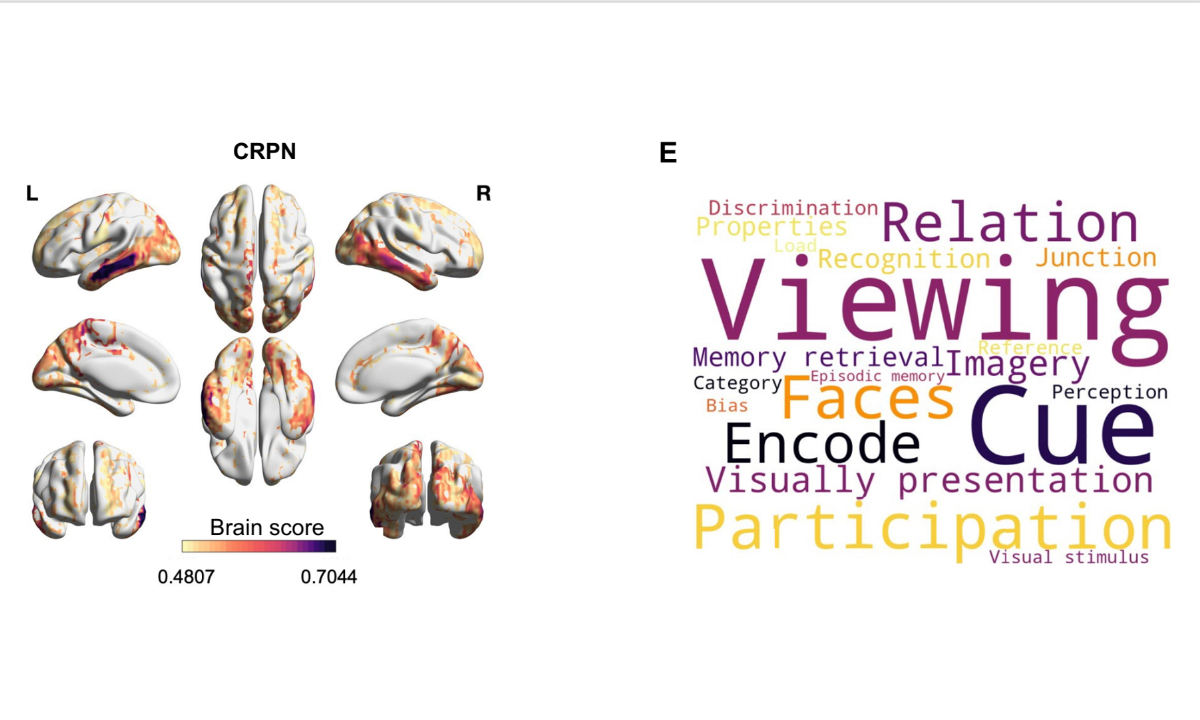
Chinese scientists have developed a “brain-reading” AI model that could help predict the risk of depression among adolescents up to four years in advance by analyzing how humans respond to facial expressions, a technology expected to inspire future development of embodied intelligent humanoids capable of perceiving human emotion and thoughts through nuanced facial cues.
WHO data show that around 332 million people worldwide have depression, about one-third of whom have treatment-resistant forms of the condition. In China, an estimated 95 million people suffer from depression, National Business Daily reported, citing statistics from the China Mental Health Survey.
Using data from a population-based longitudinal adolescent cohort recruited across several European countries, the research team led by Lu Han, assistant professor at the School of Artificial Intelligence, Shenzhen University, has built an AI model that predicted which 19-year-olds were more likely to develop depression at the age of 23. The predictions were backed up by an independent clinical cohort of individuals with depression. The team’s paper was published in the journal Science Advances this month.
According to Lu, the study used brain scans taken at age 19 to predict depression-related symptoms at age 23. The study focuses on adolescence because the transition from adolescence to early adulthood is a key developmental period when depressive symptoms can increase rapidly. The earlier risks are identified, the greater the opportunity for prevention, Lu told the Global Times on Monday, adding that the findings need to be further validated in middle-aged and older adults and across different ethnic groups in future research.
In this study, the researchers analyzed data from adolescents in the IMAGEN, a population-based longitudinal cohort recruited across several European countries. At age 19, participants underwent an fMRI emotional-face task, and their emotional symptoms were assessed using standardized questionnaires. Genetic data obtained from blood samples were also analyzed, and participants were followed up at age 23. The researchers examined whether neural representations of angry faces at age 19 were associated with emotional symptoms and could predict elevated emotional symptoms four years later.
According to Lu, people without depression can more easily distinguish emotional changes based on others’ facial expressions and respond accordingly – for example, responding with friendliness to a smiling expression. But people with depression cannot do this, and are more likely to assume people are angry with them.
A brain-aligned deep-learning model developed by Lu’s team suggested that those participants whose brains were less able to distinguish between different facial emotions and tended to perceive others as angry were more likely to develop symptoms of depression and anxiety in adulthood.
The hypothesis that adolescents at risk of depression may respond differently to other people’s facial expressions than those without such risk based on the negative information processing bias long observed in depression research: people at risk of depression are more likely to notice, interpret, or remember negative social information, Lu said.
The researchers focused on angry facial expressions because they signal social threat and rejection, which are closely linked to interpersonal difficulties and negativity bias associated with depression. They hope to further understand how this bias develops within the visual system.
Building on this, they created a deep learning model, which mimics how the brain processes visual information, to predict how the brain encodes abstract emotional concepts such as anger.
They found that 19-year-olds whose response to facial expressions was skewed in favour of negative emotions or memories were the most likely to develop some form of depression.
Based on these findings, Lu’s team then developed a marker that can identify possible warning signs.
According to Lu, the study found that the computational biomarker was linked to the depression-related variant rs11123030 and polygenic risk for depression, suggesting that genetic susceptibility may affect emotional perception. It also provided predictive information beyond family stress and socioeconomic factors, complementing rather than replacing environmental risk factors. Therefore, depression is neither purely genetic nor purely psychological, but a complex mental disorder arising from the interplay of genetic susceptibility, brain development, emotional and cognitive processes, and life experiences.
According to Lu, the study is also expected to advance AI by aligning deep neural networks with human brain activity and using parameter perturbations to probe neural mechanisms, allowing models to both predict and explain how biases may arise.
The findings suggest that future affective computing and embodied AI should go beyond simply labeling facial expressions, incorporating visual details while preventing prior assumptions from overriding real-time sensory input, Lu said, adding that the findings could provide valuable insights for developing more interpretable robotic perception systems that more closely emulate the way humans process emotions.
。
August 15 this year marks the 81st anniversary of Japan’s unconditional surrender in World War II. A ceremony themed “Nanjing Will Never Forget” was held on Saturday at the Memorial Hall of the Victims in the Nanjing Massacre by Japanese Invaders in Nanjing, East China’s Jiangsu Province.
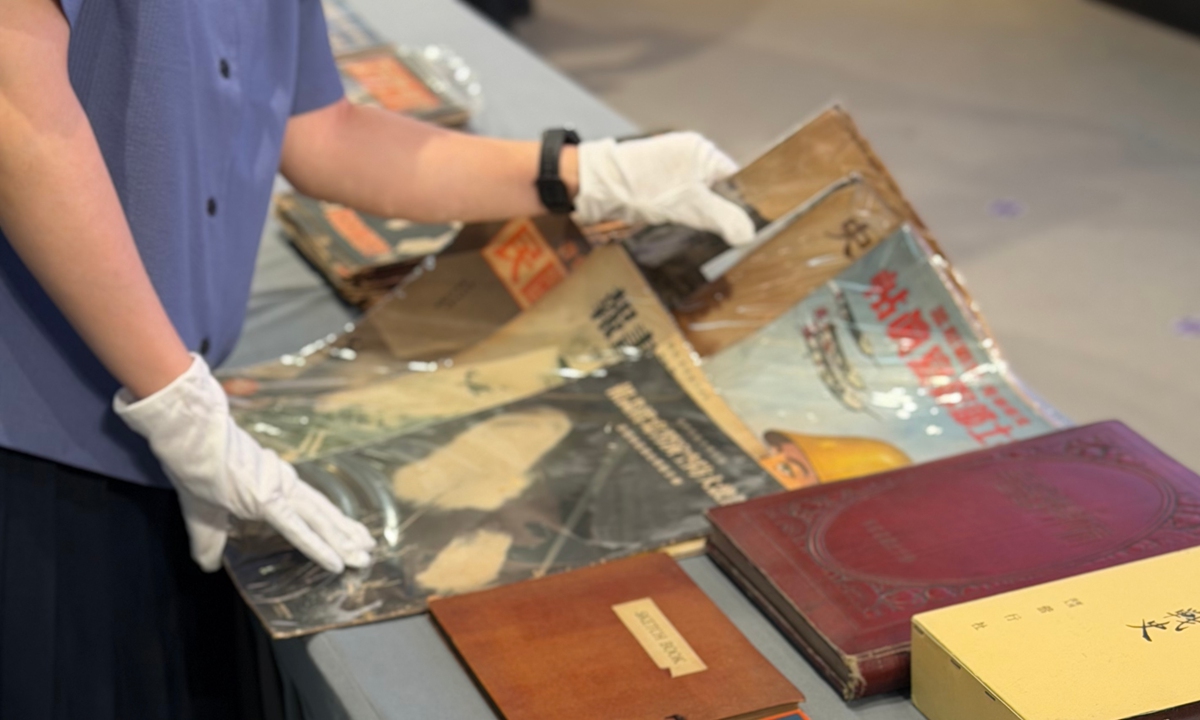
At the ceremony, a batch of newly acquired artifacts, historical materials, and documents related to the War of Resistance Against Japanese Aggression, including Japanese soldiers’ private letters, wartime postcards, educational materials on gas warfare, news compilations and French diplomatic archives, was officially added to the memorial hall's collection.
Overseas‑sourced historical archives drew wide attention among the donated materials. French youth Marcus Detrez, his compatriot Bastien Rata and Chinese youth Zhong Haosong jointly donated a set of historical documents on Japan’s aggression against China from the French diplomatic archives in Nantes, as well as Japanese‑language materials they had collected in Japan.
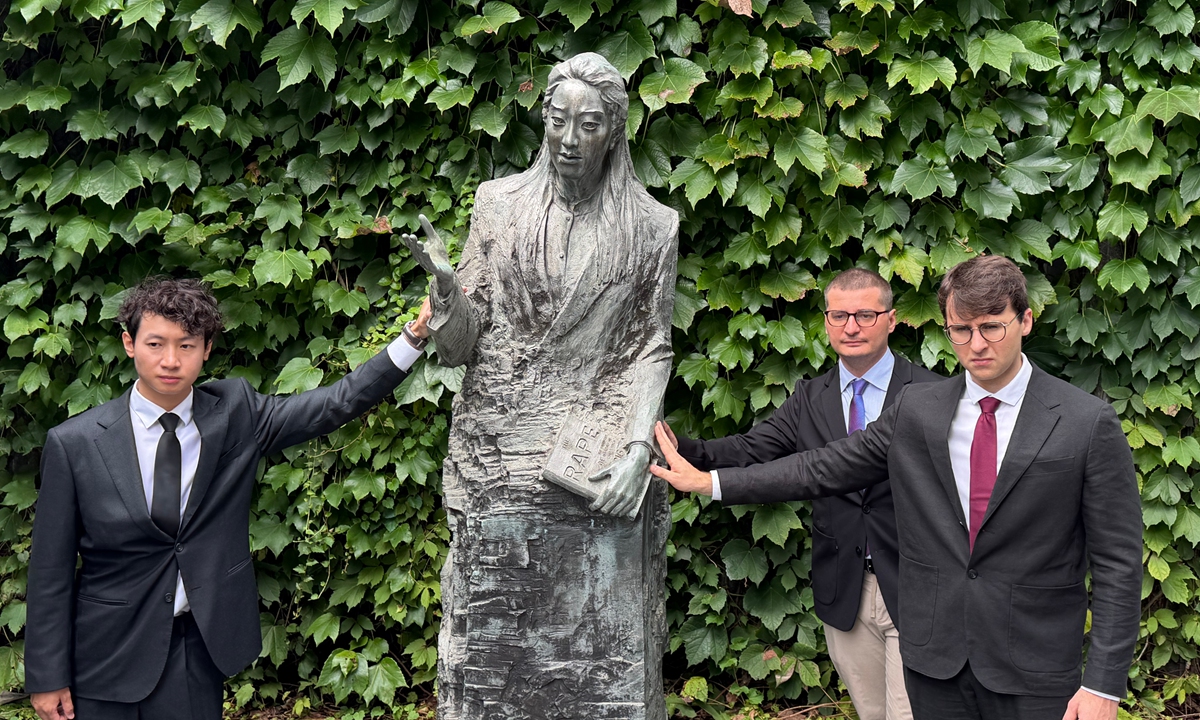
Marcus told Global Times on Saturday that, through these archives and related research, they have gained a deeper understanding of the brutality of the Nanjing Massacre. He said that collecting these materials was also aimed at conducting more educational work to help more people learn about this period of history.
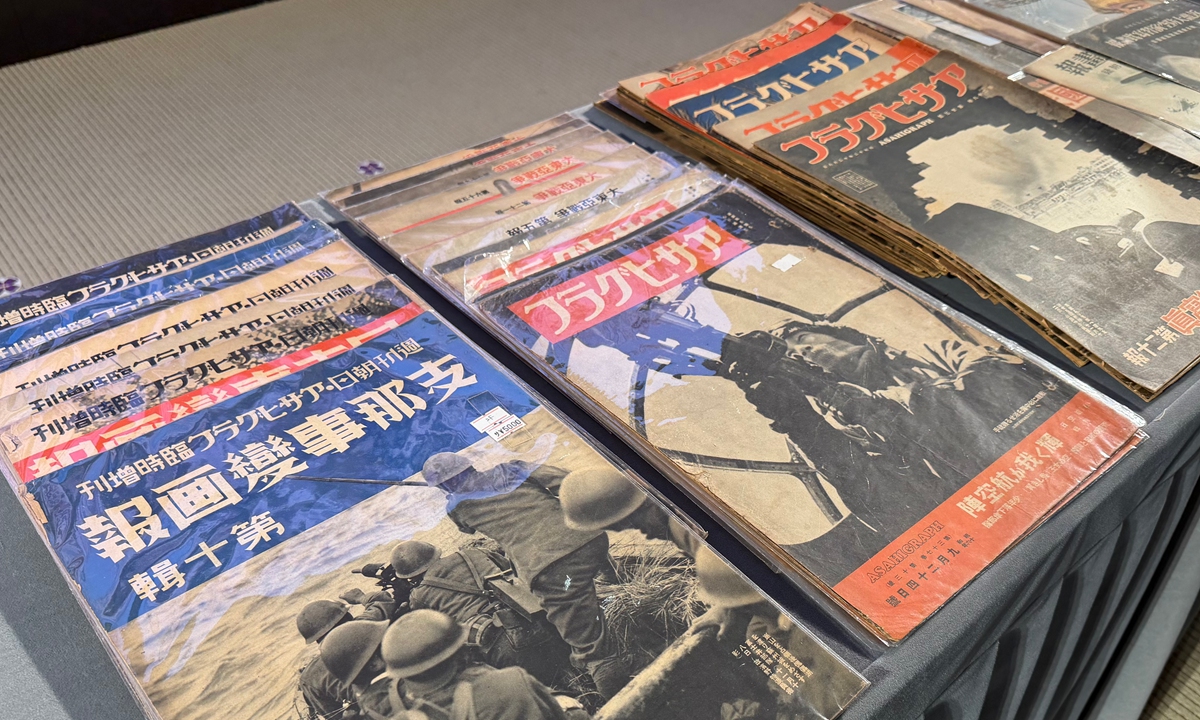
The materials brought back from Japan by Zhong include albums of documentary paintings of the Japanese invasion of China by artists accompanying the invading Japanese army, privately taken photo albums of the invading Japanese troops, and original publications from the same period, including the Asahi Shimbun. These materials all come from original Japanese records.
The overseas historical materials were collected over an extended period. Zhong said they contacted sources online and searched through antique and secondhand book channels while continuing to collect materials in Japan.
The new collection on Saturday also includes materials gathered by Chinese youths. High school student Yu Ningpeng and Xu Weizhe donated 12 private letters written by a soldier of the 20th Regiment of the Imperial Japanese Army’s 16th Division, documenting his experiences during the invasion of China. One letter, dated December 20, 1937, contains accounts related to the Japanese occupation of Nanjing.
Meng Guoxiang, a researcher at the Institute for National Memory and International Peace Studies, told the Global Times at the event on Saturday that historical research places great importance on the sources of historical materials, with original archives holding significant value.
Some of the materials donated this time were records left by the perpetrators themselves, while archives from third-party countries such as France provide another perspective, Meng said, adding that cross-checking materials from different sources can help build a more complete body of evidence.
Notably, alongside the handover of the latest batch of archival materials, the memorial hall also held a ceremony to induct the fifth group of inheritors of the historical memory of the Nanjing Massacre. Six people were named as the latest inheritors, including descendants of Nanjing Massacre survivors, descendants of eyewitnesses, and descendants of international friends. They help pass on historical memory through family traditions, educational activities and efforts to raise public awareness of history.
In recent years, a growing number of post-1990s and post-2000s private collectors, as well as foreign nationals, have joined efforts to collect historical materials, a trend that has deeply moved and impressed Zhou Feng, curator of the Memorial Hall of the Victims in Nanjing Massacre by Japanese Invaders, he told the Global Times.
Zhou said that preserving history and historical records was once widely seen as the responsibility of museums, cultural institutions and professional scholars; however, today, more and more private collectors are taking the initiative, spending their own money to collect historical materials scattered across China and overseas.
Historical memory, he said, needs to be passed down from one generation to the next. The donors come from different generations, nationalities and backgrounds, but share a common respect for historical truth and commitment to justice.
Since the beginning of this year, the memorial hall’s Nanjing Massacre Documents Center has launched a global campaign to collect relevant historical materials, receiving support from various sectors both in China and abroad. Nearly 100 donors from China and overseas have so far contributed materials to the memorial hall, Zhou said.
。
Current article:http://3uvzsi.shangyaohujunwei.bond/list_kvc304a/kwu.html
Published on:03:52:35
栏目相关
- What are the rules of war? And how do they apply to Israel's actions in Gaza?
- 记者:法兰克福并未保留马尔穆什转售分成条款
- 里奇·保罗:热火的体系能让克莱事半功倍 他只需要安心把球投进
- 同程旅行:中秋国庆旅行产品“提前订”热度大增
- 中金公司接手珠海万达商管旗下杭州公司,后者增资至约3.4亿
- 仅此一台!兰博基尼发布 Temerario Tricolore 特别定制版车型
- 【观点】申银万国:保税区库存持续去化,橡胶短期预计偏强
- 「エコバッグより売れてる」カルディの2026年限定紙袋が可愛すぎ!ピンクのストライプ柄は絶対買いと「限定SSサイズも」
- 神舟十八号3名航天员顺利进驻中国空间站
- 活力中国调研行|仿生电子皮肤 为机器赋予“触觉感知”
- 高温雨季来袭!福彩站点&彩票保管安全指南请收好
- 正式版越来越近!苹果iOS 27 Beta 7发布
热门排行
- Pharma Trailer: Nivin Pauly Steps Into a Web of Power, Pressure and Hidden Agendas
- 刘传志再次谈到5G投票事件:联想绝对没有背叛。
- 高德顺风车遇乘客约好高速费下车就不认
- “挥杆叙初心 养生伴同行”第二十一届老兵杯高尔夫邀请赛圆满举办
- 【60代に聞いた】子どもを進学させたい「東京都の私立大学」ランキング! 2位は「慶應義塾大学」、1位は?
- 一汽丰田bZ5/小鹏G7等 2025年第24周(6.9-6.15)新车预告
- 复活节假期里发生四起恶性交通事故,7人死亡,多人严重受伤
- 深水规院:公司本期计提各项资产减值准备合计约2939万元
- 省城闲置公车开到乡镇“上岗”,山东过好“车轮上”的紧日子
- “黄河溯源·鲁青同心”援青旅游专列首发
- 一审被判无期!67岁恒大老板许家印近照曝光:头发眉毛全白 体态微胖
- 台湾前“深绿”媒体人彭文正表态:不惜代价推动两岸和平统一